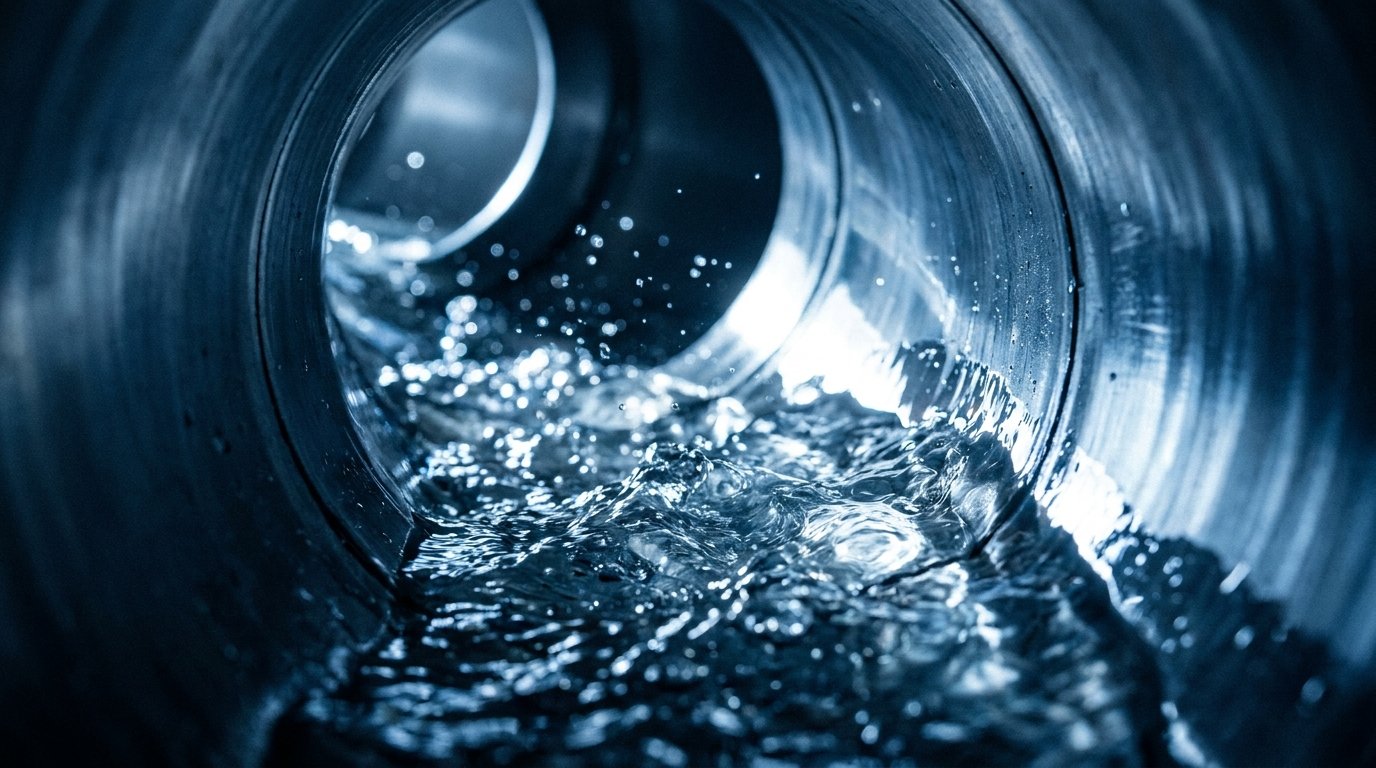
A Physical Approach to Scale Control.
No Chemicals. No Salt.
Scale is a physics problem before it is a chemistry problem. When dissolved minerals crystallise in their adherent form, they bond to pipe walls, heat exchanger surfaces, boiler tubes, and cooling tower components — reducing efficiency and accelerating wear with every operating hour.
PV WCS addresses that problem at the source. By physically conditioning water to change the crystalline behaviour of dissolved minerals, PV WCS prevents scale from forming and adhering — without removing minerals, without chemicals, and without salt.
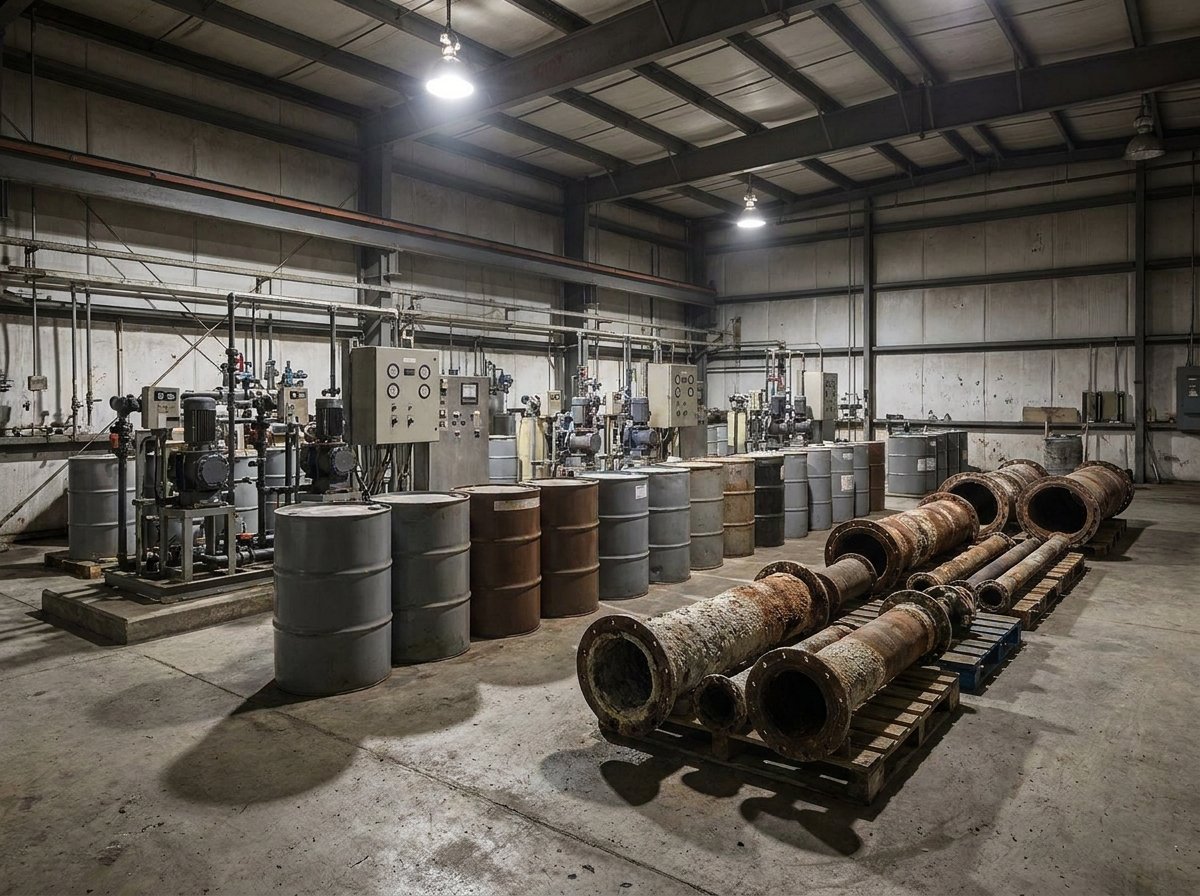
What Conventional Treatment Does, and What It Costs
Chemical treatment and salt-based water softeners have been the default response to hard water and scale for decades. Both approaches are widely used, and both carry a set of operational costs and constraints that tend to grow over time.
Chemical treatment introduces scale inhibitors, biocides, and corrosion inhibitors into the water system. Managing these programmes requires regular dosing, chemical procurement, safe handling procedures, and monitoring to maintain correct concentrations. The consumable cost is continuous — there is no point at which chemical treatment becomes self-sustaining.
Salt-based softeners require a steady supply of salt, regular regeneration cycles, and ongoing resin bed maintenance. The regeneration process produces a brine discharge that must be managed. Softened water with elevated sodium content is not appropriate for every application.
How PV WCS Physically Conditions Water
PV WCS does not treat water by adding anything to it or removing anything from it. The process is physical. Here is what happens at each stage.
Why Mineral Behaviour Matters More Than Mineral Removal
The standard assumption in water treatment is that hardness minerals are the problem, and that removing them is the answer. Salt-based softeners are built on this logic: strip the calcium and magnesium out, and the scale problem disappears.
This assumption is worth examining. Calcium and magnesium are not inherently harmful to industrial water systems. They become harmful when they crystallise in a form that adheres to surfaces. The adhesion is what causes the insulating layer on heat exchanger tubes. The adhesion is what narrows pipe bore over time.
Scientifically, calcium carbonate takes different crystalline forms depending on the conditions under which it nucleates. Calcite — the common adherent form — is thermodynamically stable and predominates in untreated hard water. Aragonite is a metastable polymorph. Same chemical formula. Different crystal lattice. Its needle-like structure does not bond to metal surfaces the way calcite does.
If the crystalline outcome can be shifted from calcite to aragonite through a physical conditioning process, the minerals can remain in the water without forming adhesive deposits. Removal is not necessary. Changing the behaviour of what is already present is sufficient.

PV WCS vs. Conventional Treatment
The table below compares PV WCS against chemical treatment programmes and salt-based water softeners across the dimensions most relevant to procurement, operations, and facility management teams.
| Dimension | PV WCS | Chemical Treatment | Salt Softener |
|---|---|---|---|
| Mechanism | Physical conditioning — alters mineral crystal behaviour | Chemical inhibitors, biocides, and scale control agents added to water | Ion exchange — replaces calcium and magnesium with sodium |
| Minerals Removed | No — minerals remain in water, crystal behaviour is changed | No — minerals remain and are chemically inhibited | Yes — calcium and magnesium ions are removed |
| Recurring Consumables | Continuous chemical procurement required | Ongoing salt supply required for regeneration cycles | |
| Maintenance Requirement | Regular dosing, monitoring, and programme management | Resin bed maintenance and regeneration cycle management | |
| Chemical Handling | Required — safe handling, storage, and dosing procedures apply | Minimal — salt handling required | |
| Discharge Considerations | Chemically treated water discharge requires compliance management | Brine discharge from regeneration requires management | |
| Operational Downtime | Monitoring and adjustment interventions required | Regeneration cycles take the unit offline periodically | |
| Product Warranty | Not applicable to treatment programmes | Varies by equipment supplier | |
| Infrastructure Integration | Installs into existing pipelines, subject to application assessment | Requires dosing equipment installation and chemical storage | Requires dedicated equipment, space, and water supply for regeneration |
Designed to Work with Your Existing Infrastructure
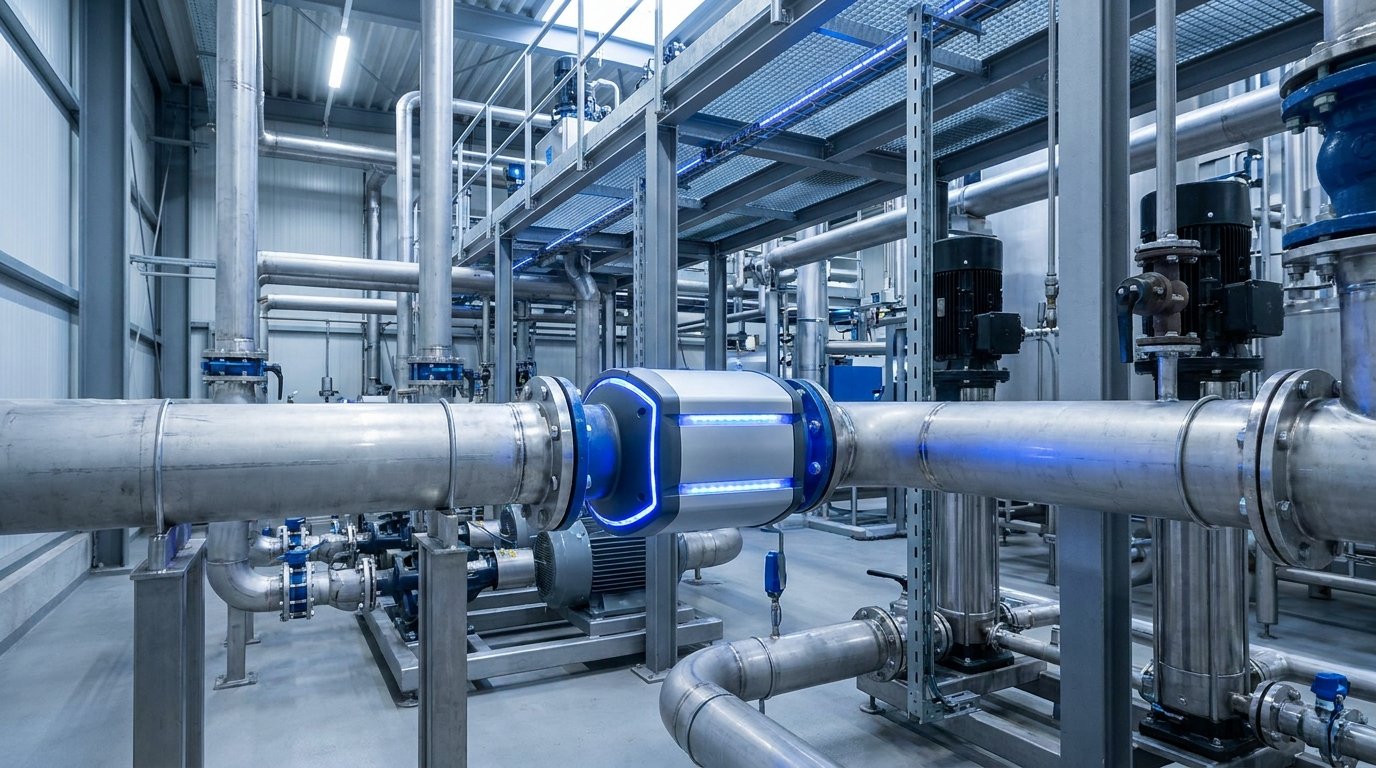
One of the practical considerations for any facility considering a change in water treatment approach is the disruption and capital cost of switching. PV WCS is designed to integrate into existing pipeline infrastructure — the unit installs inline, working with the pipework already in place rather than requiring a parallel or replacement system to be built around it.
Every installation is subject to an application-specific assessment. Industrial water systems vary in flow rates, operating pressures, temperatures, mineral load, and configuration. An assessment ensures that the PV WCS system is correctly specified before installation proceeds.
-
Inline Installation Fits directly into your existing pipework — no new tanks, no bypass loops, no parallel infrastructure.
-
Application-Specific Assessment Procon Ventures provides a free technical consultation to ensure correct specification before any commitment.
-
Ongoing Expert Support Expert technical support continues after installation — not a one-time interaction.
Ready to See How PV WCS Fits Your System?
If the physics makes sense and you want to understand how physical conditioning would perform in your specific application, the next step is a free technical consultation. Bring your system parameters, your water quality data, or simply your current pain points. Our technical team will work through the specifics with you and give you a grounded assessment of whether PV WCS is the right fit for your facility.
Talk to Our Technical Team
Whether you have a specific site, a water quality challenge, or you are simply evaluating options, our technical team is the right first conversation. Every enquiry receives a grounded, application-specific response — not a generic sales pitch.