Knowledge Hub: Hard Water, Scale, and Industrial Water Conditioning — Explained
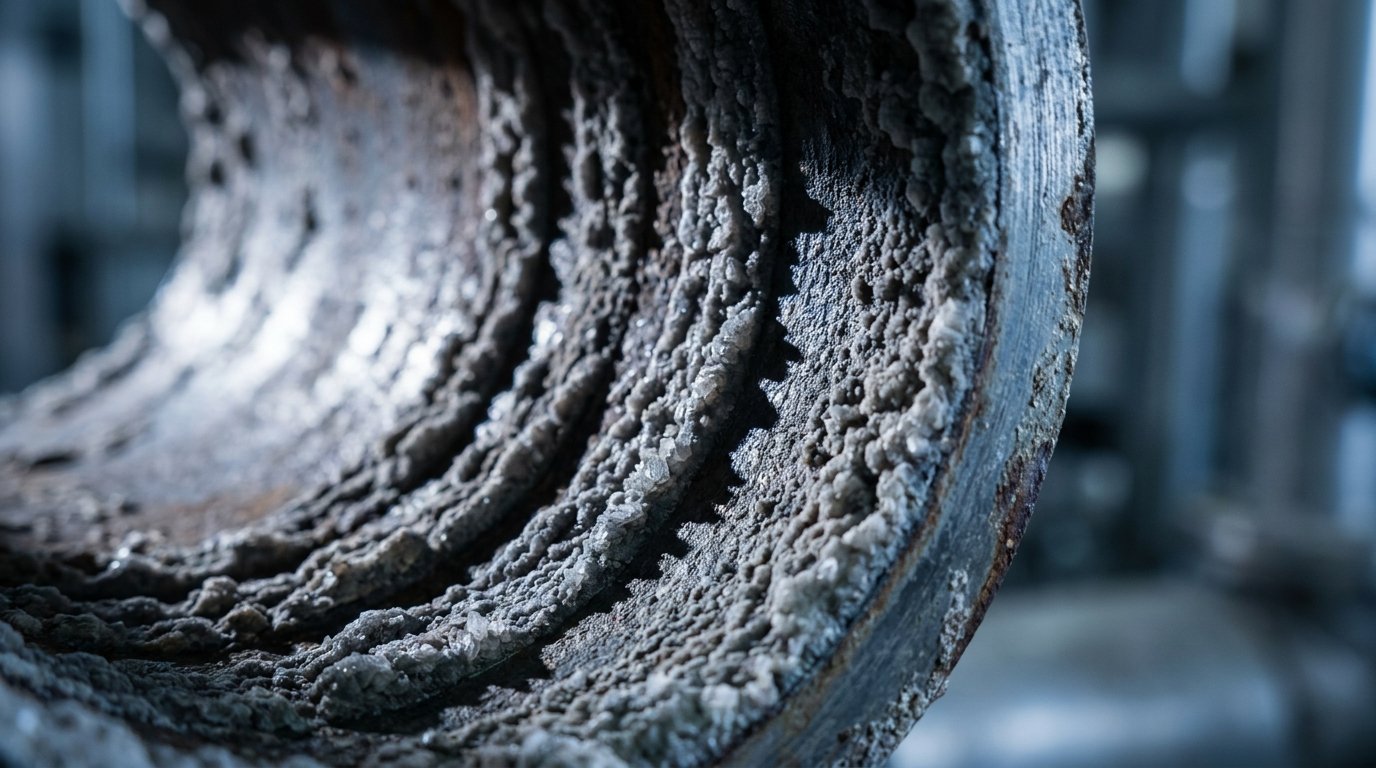
Scale formation is one of the most consistently underestimated problems in industrial and commercial water systems. It builds slowly, hides inside pipelines and heat exchangers, and reduces efficiency long before anyone notices. By the time it shows up as a maintenance problem or an energy bill spike, the cost is already real.
The Procon Ventures Knowledge Hub exists to change that. This is a resource for engineers, facility managers, procurement teams, and operations professionals who want to understand what is actually happening inside their water systems — and what they can do about it.
Articles here cover the science of hard water and mineral behaviour, how scale forms and adheres to surfaces, the practical consequences for heat exchangers, boilers, cooling towers, pipelines, and HVAC systems, and how physical water conditioning compares to conventional chemical and salt-based treatment approaches. The content is written to be technically credible and plain enough to share across a team.
If your facility runs on water — and most industrial facilities do — the information here is directly relevant to your operating costs, equipment life, and maintenance load.
Browse Articles
Hard Water ScienceScale FormationHeat Exchanger PerformanceBoiler EfficiencyCooling Tower MaintenancePipeline ScalingHVAC Water SystemsChemical vs Physical TreatmentSalt-Free ConditioningIndustrial Water ManagementHard Water ScienceScale FormationHeat Exchanger PerformanceBoiler EfficiencyCooling Tower MaintenancePipeline ScalingHVAC Water SystemsChemical vs Physical TreatmentSalt-Free ConditioningIndustrial Water Management
Technical Articles & Expert Perspectives
The Information Your Water System Decisions Should Be Built On
Browse articles covering the core topics that industrial and commercial water system operators need to understand. Each piece is written to give you real technical grounding — not generic advice.
Article 01
What Is Hard Water and Why Does It Matter in Industrial Systems?
Hard water contains dissolved minerals — primarily calcium and magnesium — that behave differently depending on temperature, pressure, and flow conditions. This article explains the chemistry behind mineral behaviour, where hardness comes from, and why the same water supply can cause vastly different scaling problems across different equipment types. Understanding hardness is the first step toward managing it intelligently.
How Scale Forms — and Why It Is So Difficult to Stop
Scale does not appear overnight. It accumulates through a process of mineral crystallisation on heat-transfer surfaces, pipe walls, and valve seats. This article walks through the conditions that accelerate scale formation, why certain surfaces are more vulnerable than others, and what makes calcium carbonate scale particularly resistant to flow-based removal. Understanding formation mechanics is critical to evaluating any treatment approach.
The Real Cost of Scale in Heat Exchangers and Boilers
Scale acts as thermal insulation. Even a thin deposit on a heat exchanger surface measurably reduces heat-transfer efficiency, forcing equipment to consume more energy to achieve the same output. This article examines how scale affects boilers, heat exchangers, and cooling systems in operational terms — covering energy losses, maintenance intervals, shutdown frequency, and the compounding effect on equipment life.
Pipeline Scaling: Restricted Flow, Pressure Loss, and What Happens Next
As mineral deposits accumulate on pipe interiors, effective bore diameter reduces and flow resistance increases. This article covers how pipeline scaling progresses, how it interacts with pressure and pump performance, and why the damage profile is often invisible until operational symptoms become acute. Facility managers responsible for distribution systems and process pipelines will find this particularly relevant.
Scale and HVAC Systems: A Maintenance Problem That Compounds
HVAC systems that use water — chilled water loops, cooling towers, fan coil units, and associated pipework — are consistently exposed to scaling conditions. This article explains how scale affects HVAC thermal performance and reliability, why scaling problems in HVAC tend to be discovered late, and what facility managers and HVAC operators should be monitoring to get ahead of the problem.
Chemical Water Treatment: What It Does, What It Costs, and What It Does Not Solve
Chemical dosing is the conventional response to industrial scaling, and it is widely used. This article examines how chemical treatment programmes work, what the ongoing cost structure looks like across consumables, management, and compliance, and where chemical approaches have inherent limitations — particularly around chemical handling risk, wastewater implications, and the requirement for continuous intervention to maintain effect.
Salt-Based Water Softeners in Industrial Applications: Capabilities and Trade-Offs
Ion-exchange water softeners replace calcium and magnesium ions with sodium, preventing scale formation but fundamentally altering water chemistry. This article covers how softening works, what it is well-suited to, and the trade-offs that come with salt consumption, regeneration cycles, brine discharge, and the downstream implications of softened water in certain industrial process and food-contact applications.
Physical Water Conditioning: A Different Approach to the Same Problem
Physical water conditioning does not remove minerals from water. Instead, it changes the way dissolved minerals crystallise — reducing their tendency to form hard, adherent scale deposits on surfaces. This article explains the conditioning process behind PV WCS, how it differs from chemical and salt-based treatment in both mechanism and operational profile, and what that difference means for facilities that want to reduce scale without adding chemical programmes or consumable costs.
Scaling in Pharmaceutical, Food Processing, and Regulated Environments
Industries operating under strict hygiene and process standards face particular challenges with water treatment. Chemical dosing in food-contact or pharmaceutical water systems carries compliance implications that do not apply in general industrial settings. This article examines how scaling affects regulated production environments and why the treatment approach chosen has consequences beyond scale control alone.
When to Assess Your Water System: Indicators That Scale Is Already Affecting Operations
Most facilities respond to scaling problems after they have already become costly. This article outlines the operational indicators that suggest scale is actively affecting system performance — from rising energy consumption and reduced throughput to unexplained equipment failures and increasing maintenance frequency. It also covers what a useful application-specific assessment should cover and what questions to ask before committing to any treatment approach.
Have a Specific Technical Question About Your Water System?
The articles here are a starting point. Every industrial water system has its own configuration, water chemistry, and operating conditions — and scaling problems that look similar on the surface often have different root causes and different optimal responses.
Procon Ventures offers a free technical consultation for facility managers, engineers, and procurement teams who want to assess whether physical water conditioning is applicable to their specific systems. There is no obligation, and no sales process — just a direct technical conversation with people who understand industrial water systems.
You can also request the PV WCS product brochure for a detailed overview of the technology, system specifications, and application scope. Reach us at marketing@pvwaterconditioning.com.
Talk to Someone Who Understands Industrial Water Systems
Whether you are in the early stages of assessing a scaling problem or ready to evaluate physical water conditioning for a specific application, we are available for a direct technical conversation. No pitch, no sales cycle — just the technical detail you need to make the right decision for your facility.